
Refrigerant Types and Environmental Impact
Understanding modern refrigerants, environmental regulations, and what they mean for your HVAC system
In Short
Refrigerant is the lifeblood of your air conditioning system—the chemical compound that absorbs heat from your home and releases it outdoors. But not all refrigerants are created equal. Environmental concerns and regulatory changes are driving a global transition to more eco-friendly refrigerants, affecting HVAC systems worldwide and creating important decisions for homeowners.
Key Points
- Understanding Refrigerant Basics
- Historical Perspective: R-22 (Freon)
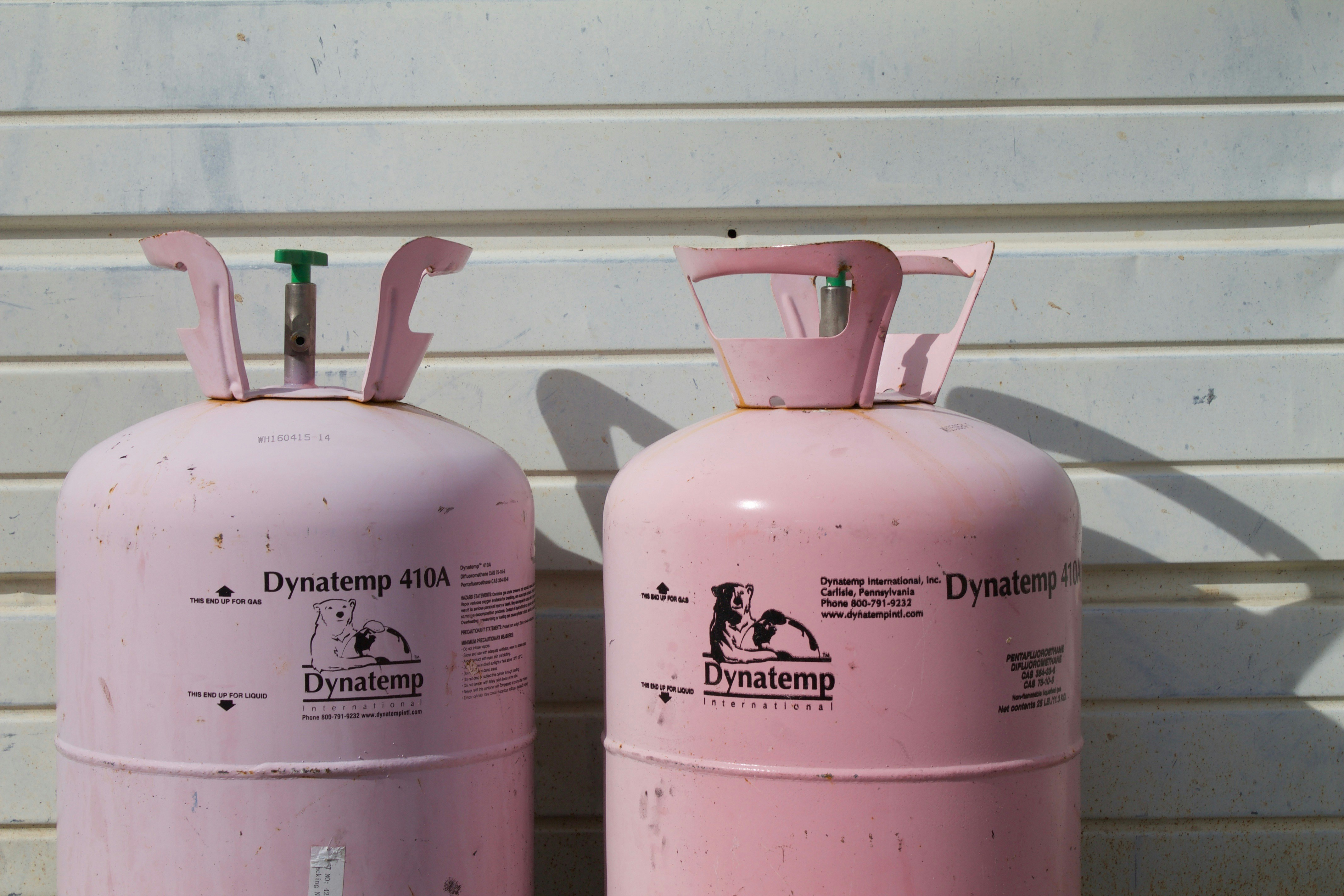
- R-410A: The Current Standard
- R-32: The Next Generation
- Cost Comparison
Refrigerant is the lifeblood of your air conditioning system—the chemical compound that absorbs heat from your home and releases it outdoors. But not all refrigerants are created equal. Environmental concerns and regulatory changes are driving a global transition to more eco-friendly refrigerants, affecting HVAC systems worldwide and creating important decisions for homeowners.
This comprehensive guide explores current refrigerant types, their environmental impact, upcoming regulations, cost implications, and what you need to know when repairing or replacing your HVAC system in Florida's climate.
Understanding Refrigerant Basics
How Refrigerants Work
Refrigerants are chemical compounds that easily transition between liquid and gas states, absorbing and releasing heat in the process. This property makes them ideal for air conditioning:
The Refrigeration Cycle:
- Indoor Evaporation: Liquid refrigerant absorbs heat from indoor air and evaporates into gas
- Compression: Compressor pressurizes the gas, increasing its temperature
- Outdoor Condensation: Hot gas releases heat to outdoor air and condenses back to liquid
- Expansion: Pressure drops, cooling the liquid before returning indoors
This cycle repeats continuously while your AC runs, transferring heat from inside your home to the outdoors, creating the cooling effect you experience.
Historical Perspective: R-22 (Freon)
The Rise and Fall of R-22
For decades, R-22 (commonly called Freon) was the standard refrigerant in residential air conditioners. However, its environmental impact led to its phase-out.
Environmental Concerns with R-22:
- Ozone Depletion: R-22 is a hydrochlorofluorocarbon (HCFC) that damages the ozone layer
- Greenhouse Gas: Contributes to global warming with high global warming potential (GWP)
- Montreal Protocol: International agreement mandated phase-out
R-22 Phase-Out Timeline:
- • 2010: New AC systems could no longer use R-22
- • 2015: Production severely limited
- • 2020: Complete ban on R-22 production and import
- • Present: Only recycled R-22 available at extremely high prices
Current R-22 Costs: $100-150 per pound vs $5-15/lb for modern refrigerants
Systems using R-22 face expensive recharge costs and limited long-term viability.
R-410A: The Current Standard
About R-410A (Puron)
R-410A, marketed as Puron, replaced R-22 as the industry standard refrigerant. It's used in the majority of residential AC systems installed from 2010 onwards.
Advantages of R-410A:
- No ozone depletion (ODP = 0)
- Better cooling capacity than R-22
- Improved energy efficiency
- Widely available and affordable
- Proven track record of reliability
Limitations of R-410A:
- High global warming potential (GWP = 2,088)
- Subject to future phase-down regulations
- Requires specialized equipment vs R-22
- Higher operating pressures
R-410A Phase-Down Timeline:
While R-410A remains the current standard, environmental regulations are driving a gradual transition to lower-GWP alternatives:
- • 2025: EPA begins phase-down of HFC production
- • 2029: Significant production restrictions begin
- • 2036: 85% reduction in HFC production targeted
Note: Existing R-410A systems will remain serviceable. The phase-down affects new production, not existing equipment or servicing.
R-32: The Next Generation
Understanding R-32 Refrigerant
R-32 represents the next evolution in refrigerant technology, offering significantly lower environmental impact while maintaining excellent performance.
Environmental Comparison
| Property | R-22 | R-410A | R-32 |
|---|---|---|---|
| ODP (Ozone Depletion) | 0.055 | 0 | 0 |
| GWP (Global Warming) | 1,810 | 2,088 | 675 |
| Energy Efficiency | Baseline | +5% | +10% |
R-32 has 68% lower GWP than R-410A, making it significantly more environmentally friendly.
Benefits of R-32:
- Environmental: 68% lower GWP than R-410A, zero ozone depletion
- Efficiency: 10% better energy efficiency than R-410A systems
- Charge Volume: Requires 20% less refrigerant than R-410A
- Future-Proof: Complies with long-term environmental regulations
- Single Component: Easier to recycle and handle than blends
R-32 Considerations:
- Flammability: Mildly flammable (A2L classification) - requires trained technicians
- Availability: Still gaining market share in United States
- System Design: Not compatible with R-410A systems - requires new equipment
R-32 Adoption in Florida
R-32 is widely adopted in Asia, Europe, and Australia. United States adoption is accelerating, with major manufacturers introducing R-32 systems.
Current Status (2026):
- • Major brands offering R-32 systems: Daikin, Mitsubishi, LG, others
- • Growing availability in residential market
- • EPA approvals in place for residential use
- • Technician training programs established
- • Expected to become standard within 5-10 years
Cost Comparison
Refrigerant Cost Analysis
Per pound cost - recycled only
Per pound cost - widely available
Per pound cost - growing availability
System Recharge Costs (3-Ton System):
R-22 System Recharge
6 lbs refrigerant needed × $125/lb = $750
Plus labor: $150-250
Total: $900-1,000
R-410A System Recharge
6 lbs refrigerant needed × $10/lb = $60
Plus labor: $150-250
Total: $210-310
R-32 System Recharge
4.8 lbs refrigerant needed × $14/lb = $67
Plus labor: $150-250
Total: $217-317
Note: R-32 requires 20% less refrigerant charge, partially offsetting slightly higher per-pound cost.
Upgrade Guidance
Should You Upgrade Your System?
If You Have R-22 System:
Recommendation: Replace
- • R-22 recharge costs are prohibitively expensive
- • Limited refrigerant availability
- • Systems likely 15+ years old (near end of life)
- • Modern systems 40-60% more efficient
- • Replacement pays for itself in energy savings
If You Have R-410A System:
Recommendation: Keep until major failure or 15+ years old
- • R-410A remains serviceable and affordable
- • Phase-down timeline allows years of continued use
- • When replacement time comes, consider R-32 systems
- • Regular maintenance extends system life
When Buying New System:
Recommendation: Consider R-32 for future-proofing
- • Lower environmental impact
- • Better energy efficiency (lower operating costs)
- • Complies with future regulations
- • Slightly higher upfront cost offset by long-term savings
- • Growing availability and support
Our AC installation specialists can help you evaluate refrigerant options when replacing your system.
Refrigerant Conversion: Why It's Not an Option
Some homeowners ask about converting existing systems to use different refrigerants. This is not recommended or practical:
Why Conversion Doesn't Work:
- Incompatible Components: Different refrigerants require different compressor oils, expansion valves, and materials
- Pressure Differences: R-410A and R-32 operate at higher pressures than R-22 systems can handle
- Cost: Conversion costs nearly equal full replacement
- Reliability: Converted systems prone to failures and efficiency loss
- Warranty: Voids manufacturer warranties
Bottom Line: When it's time to change refrigerants, it's time to replace the system.
Environmental Impact
Your Choice Makes a Difference
Switching from R-22 or R-410A to R-32 significantly reduces your carbon footprint:
Carbon Footprint Reduction Example:
R-410A System (10 Years)
GWP Impact: ~12,528 CO2-equivalent
R-32 System (10 Years)
GWP Impact: ~4,050 CO2-equivalent
68% Reduction in Climate Impact
Plus 10% better energy efficiency means less electricity consumption and lower carbon emissions from power generation.
Related Resources
Ready to Upgrade to Modern Refrigerant?
Get expert guidance on refrigerant options and system replacement from Likir HVAC Solutions